
Independent Mould Advice
Mould and Condensation Advice in Wiltshire
Black mould in the corner, windows running with water every morning, a musty smell in the wardrobe. If this sounds like your home, it can be fixed. Wiltshire Damp Survey gives independent mould and condensation advice to homeowners, tenants and landlords in Wiltshire. We find out why moisture is building up and explain in plain English what to do about it. Most mould here is caused by condensation, not a leak or rising damp, and we do not sell treatments, so our advice is never tied to a sale.
Request for your survey

What Causes Condensation and Mould in Wiltshire Homes
In most cases it is a mix of things: not enough ventilation, cold surfaces, low or on-and-off heating, and daily habits. That is why a quick spray of mould remover rarely solves the problem for good.
Signs of Condensation and Mould in Your Home
These are the problems Wiltshire homeowners and tenants describe to us most often.
Water on Windows and Sills
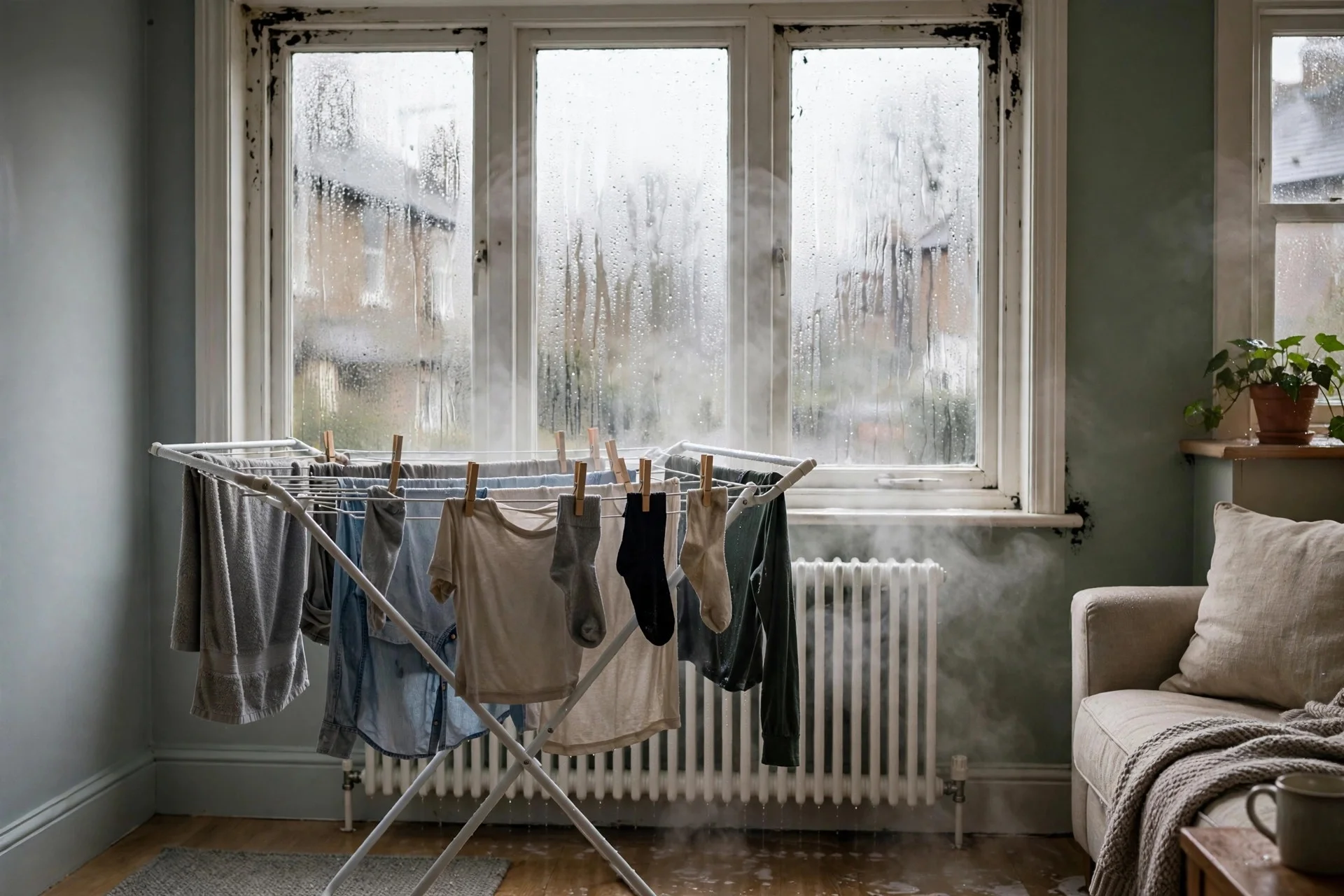
Droplets or pools of water on the inside of your windows, especially first thing in the morning. Wooden frames can go soft and dark, and black spots often appear along the seals.
Black Mould on Walls and Ceilings
Black or dark green spots in the corners of rooms, above windows, on bedroom walls and on bathroom ceilings. Outside walls and north facing rooms are the usual places.
Mould Behind Furniture and in Wardrobes
Still air hides moisture. Mould behind beds, sofas and wardrobes, or on clothes and shoes in a cupboard, is a classic sign that air is not moving around the room.
A Musty Smell
A damp, stale smell that does not go away after cleaning usually means moisture is sitting somewhere in the room, even when you cannot see mould yet.
Mould after new windows is also very common. New windows seal a home tightly. If nothing else changes, the moisture they used to let out stays inside.
Is It Condensation or Is It Damp?
Condensation
Shows up as water droplets on cold surfaces, black mould in corners, and mould behind furniture. It is worse in winter, in bathrooms, kitchens and bedrooms, and it often clears when the room is warmed and aired.
Rising Damp
Stays low on ground floor walls, usually below about one metre. It tends to leave a tide mark and white salt marks, and it does not change much with the weather.
Penetrating Damp
Appears as patches that get worse after heavy rain. It often sits near a leaking gutter, a damaged roof, cracked brickwork or a bad window seal.
What Our Mould and Condensation Consultation Includes
We Listen First
We ask where the mould is, when it started, and what changes with the seasons. We also ask how the home is heated and used, because daily habits are part of the picture.
We Inspect the Affected Rooms
We look closely at windows, walls, ceilings, corners and the areas behind furniture. We check how much ventilation the room really has, including extractor fans, trickle vents, chimneys and the loft.
We Test with Specialist Equipment
We use a thermal imaging camera to show cold spots on walls and ceilings that you cannot see. We use hygrometers to measure humidity and temperature, so we know how much moisture is in the air and where it is gathering.
We Rule Out Other Causes
Before we call it condensation, we check that there is no leak, no rising damp and no penetrating damp behind the problem. If we find one, we can help with leak detection or a damp and timber survey.
We Explain the Cause and What to Do
You get clear, practical recommendations that fit your home and your budget. Many fixes are small and affordable, such as better ventilation, steadier heating and simple changes to daily routines.
How the Process Works
Call and Book
Phone us on 07738 572899 and tell us what you are seeing. We will arrange a time to visit your Wiltshire property.
Inspection and Testing
We check the affected rooms, take readings with our equipment and look for the real source of the moisture.
Clear Advice and Report
We explain what we found in everyday language, and give you a clear report of the cause and the steps to take. Homeowners, tenants and landlords can all use it.
Practical Advice You Can Use Straight Away
Ventilate Where Moisture Is Made
Use the extractor fan when you cook and shower, and leave it running for a while afterwards. Keep the kitchen and bathroom doors closed while you do, so the steam does not drift into cold bedrooms. Open a window for a few minutes each day if you have no extractor.
Dry Washing Smartly
Drying washing on radiators or around the home is one of the biggest moisture sources. If you can, dry it outside, or in one room with a window open and the door closed.
Keep a Steady Background Heat
A home that is warmed in short bursts then left to go cold is more likely to have condensation than one kept at a steady, gentle temperature.
Leave a Gap Behind Furniture
Move wardrobes and beds a few centimetres from outside walls so air can move behind them. Avoid packing cupboards so tightly that air cannot get in.
Cleaning Small Patches of Mould

Benefits of Finding the Real Cause
Mould in Rented Property: Advice for Landlords and Tenants in Wiltshire
For Tenants
Take dated photos of the mould, report it to your landlord or agent in writing, and keep a copy. Keep heating and ventilating as best you can. An independent mould report gives you clear evidence of what is happening and what needs to be done.
For Landlords and Letting Agents
Landlords have a duty to keep a home safe and fit to live in, and damp and mould complaints should be taken seriously. A mould report shows whether the cause is condensation, a building defect such as a leak, or a mix of both, and gives your contractor a clear brief.
Cost of a Mould and Condensation Consultation in Wiltshire
Because we do not sell mould treatments or damp proofing, there is no pressure to buy anything after the visit. If your home does need repair work, the cost depends on the size of the problem and the cause, and we explain this in our advice so you can compare quotes with confidence. If a leak or flood has caused the mould, our water damage restoration service can help.
Mould and Condensation Help Across Wiltshire
We look after homes across Wiltshire, including the areas below.
Why Choose Wiltshire Damp Survey
We are a local Wiltshire business, based at 18 Church Walk North, Swindon, SN25 3DJ. Here is what you can expect.
Over 20 years of experience locating moisture problems in homes.
More than 1,700 independent damp surveys completed.
Fully qualified surveyors who explain things in plain English.
Completely independent advice — we do not sell damp proofing or mould treatments.
Thermal imaging cameras and hygrometers used on every consultation.
You can see our qualifications on our accreditations page.
Customers who have reviewed us on Google mention that we arrive on time, explain things clearly and charge fair prices. Read more about us on our about page.
Other Services We Offer in Wiltshire
Damp and Water Investigations
Find the real cause of rising damp, penetrating damp and water getting into your home.
Damp and Timber Surveys
Checks for woodworm, wet rot and dry rot, with a clear report you can act on.
Pre-Purchase Damp Surveys
Buying a home in Wiltshire? Know about damp and timber problems before you exchange contracts.
Water Damage Restoration
Help to assess, dry out and put right the damage after leaks, burst pipes and floods.
Drone Property Services
Aerial checks of roofs, chimneys and gutters to spot where water is getting in, with no ladders or scaffolding needed.
Frequently Asked Questions About Mould and Condensation in Wiltshire
Condensation usually shows as water on windows and black mould in corners and behind furniture, and it is worse in winter. Rising damp stays low on ground floor walls and leaves tide marks. Penetrating damp gets worse after rain. A survey with a thermal imaging camera and hygrometers is the reliable way to tell them apart.
Mould can irritate the nose, throat and chest, and it can make asthma and allergies worse. Children, older people and anyone with breathing problems are most at risk. If someone at home is affected, speak to your GP and deal with the cause of the moisture as soon as you can.
Cleaning removes the mould you can see, but not the moisture that feeds it. Until ventilation, heating or cold surfaces are dealt with, the mould will return. A consultation finds the cause so the fix lasts.
They can. New windows seal a home tightly, so moist air stays inside. Without enough ventilation, condensation and mould can appear where there was none before. Trickle vents, extractor fans and good daily habits usually help.
It depends on the cause. Landlords must keep a home safe and fit to live in, and must deal with problems such as leaks or poor ventilation. Tenants can help by heating and airing the home and by reporting problems early in writing. An independent report shows what is causing the mould. For legal advice, contact Shelter or your local council.
The consultation fee is £55 for properties within 15 miles of Swindon, which covers the whole town.
No. We are independent and do not sell mould treatments or damp proofing. We find the cause and tell you what needs doing, so you only pay for work you need. Small patches can often be cleaned at home.
Book a Mould and Condensation Consultation in Wiltshire
WhatsApp us