
Assessment · Drying · Restoration
Water Damage Restoration Across Wiltshire
Water spreads fast. A burst pipe, a leaking appliance or heavy rain can soak floors, walls and ceilings in a short time, and the damage keeps growing while the moisture stays trapped inside the building. Our water damage restoration service starts with a proper assessment of the damage, then a clear drying plan to return your property to a safe and dry condition. We measure the moisture, explain what needs doing in plain English, and check the property again before any repair or rebuilding work begins.
Request for your survey
What to Do First After Water Damage
Immediate Steps
Common Causes of Water Damage
Most of the homes we assess across Wiltshire have been damaged by one of these:
Burst or leaking pipes
Including burst pipe damage in lofts and under floors.
Escape of water from appliances
Washing machines, dishwashers and other appliances.
Roof leaks
After storm damage or worn coverings.
Heavy rainfall or flooding
Getting into the property through walls, floors or openings.
Blocked drains
Drainage problems that back up into the building.
Wastewater leaks
From bathrooms and soil pipes.

Signs the Damage Goes Deeper Than It Looks
Professional Water Damage Assessment
Structural Drying and Moisture Removal
Preventing Mould and Further Damage

Final Inspection Before Repairs Begin
How Water Damage Restoration Works
Get in touch
Call 07738 572899 or send us a message. Tell us what happened and when, and what you have done so far.
We assess the damage
We inspect the property, measure moisture in the materials and identify everything the water has affected.
You get a drying and restoration plan
We explain the plan and the findings in plain English, with a written report of the assessment.
Drying, monitoring and final check
The property is dried and monitored, then inspected again to confirm it is ready for repairs.
Why a Proper Restoration Process Helps
Hidden moisture found
Readings show where water has travelled, including the damage you cannot see.
Mould and rot prevented
Thorough, monitored drying stops the secondary damage that costs more than the original leak.
Repairs done once
The final inspection confirms the building is dry, so repair work is not wasted on damp materials.
A report for your records
A clear written assessment you can pass to your insurer, landlord or builder.
Honest advice
We are independent surveyors. If part of the property needs less work than you feared, we will tell you.
How Much Does Water Damage Restoration Cost?
Water damage restoration cost depends on the scale of the damage. How much water came in, how many rooms and materials it reached, and how long the drying takes all affect the work involved. A single room after a small leak is a very different job from a whole ground floor after a flood.
There is no fixed price list, because every incident is different. Call us or send a message and we will assess the property and give you a clear picture of the work and the cost before the restoration plan starts. There is no obligation.
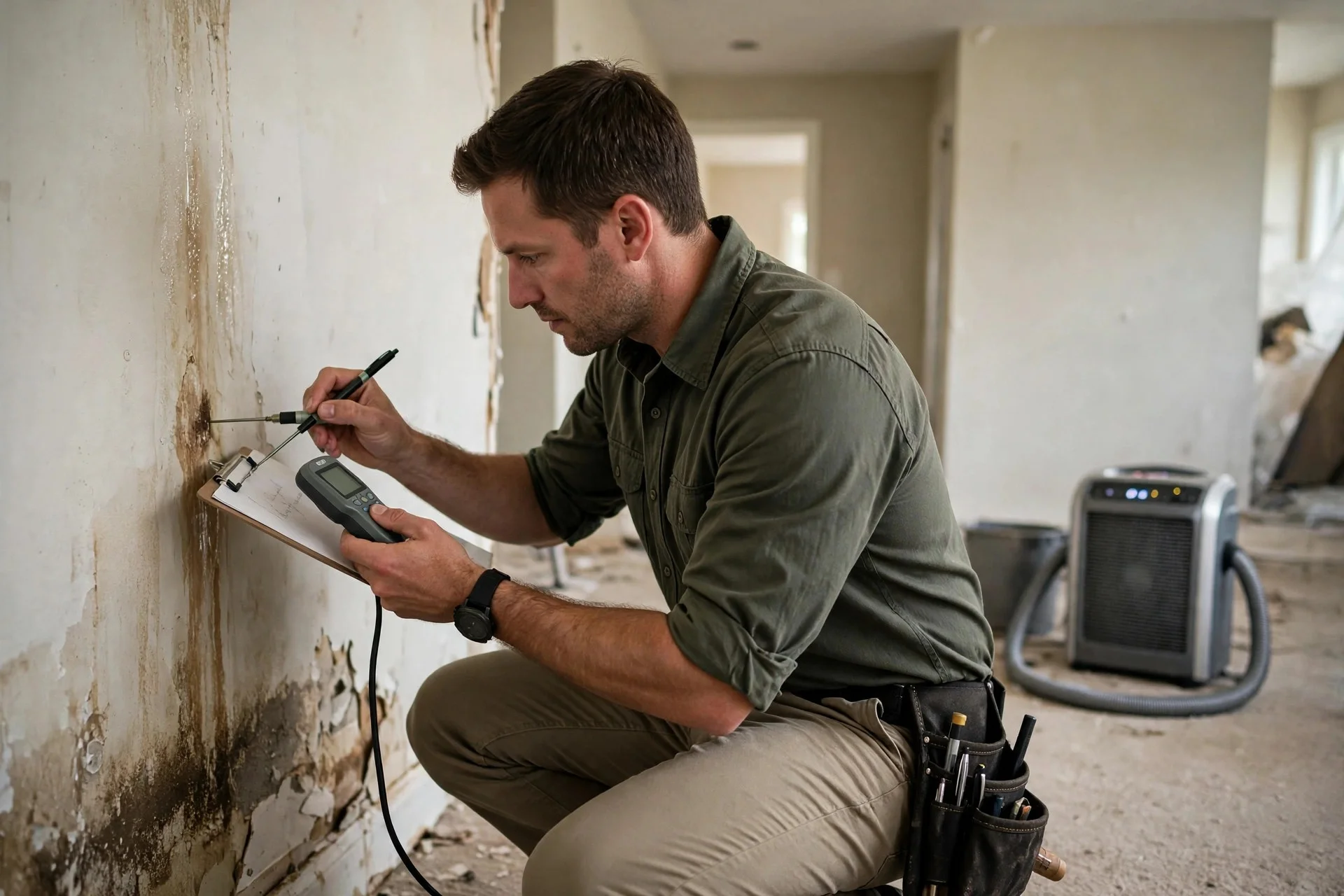
Water Damage Restoration in Wiltshire Homes
Homes across Wiltshire range from older terraces and stone cottages to modern estates, and water behaves differently in each. Older homes with suspended timber floors can hide a soaked sub floor void for weeks. Newer homes with solid floors and plasterboard walls can trap moisture inside the wall build up, where it does quiet damage.
We are based in Swindon and cover all of Wiltshire, so you speak directly to the surveyor who will assess your property. We are open Monday to Saturday, from 7am to 9pm.
Why Choose Wiltshire Damp Survey?
Independent surveyors
Our job is assessing and drying your property properly, with honest advice at every step.
Over 20 years of experience
Two decades of dealing with damp, leaks and water damage in homes across Wiltshire and the surrounding counties.
Trained and certified surveyors
Our surveyors hold professional training and certification in damp surveying, building defect inspection, health and safety, property preservation, and surveying and building inspection.
Measured, not guessed
Moisture levels are measured and monitored, so drying and repairs are based on readings.
Local and easy to reach
Based at 18 Church Walk North in Swindon, serving all of Wiltshire. Open Monday to Saturday, from 7am to 9pm.
Our Other Services
Damp & Water Investigations
For rising damp, penetrating damp and water getting in from outside. We trace the moisture to its source with specialist equipment and give you a clear written report with practical next steps.
Damp & Timber Surveys
Worried about woodworm, wet rot or dry rot as well as damp? We inspect your timbers thoroughly, check whether any decay or beetle activity is live, and report exactly what we find.
Leak Detection
If the source of the water is still hidden, we pinpoint leaks behind walls, under floors and in pipework without digging up your home, so the problem is fixed at its root.
Mould & Condensation Advice
For black mould, streaming windows and musty rooms. We find out why condensation is forming in your home and give you practical advice and a written report to stop it coming back.
Pre-Purchase Damp Surveys
Buying a home in Wiltshire? Get an independent damp and timber check before you exchange contracts, with a clear report you can share with your solicitor or lender.
Drone Property Services
Aerial checks of roofs, chimneys and gutters to spot where water is getting in, with no ladders or scaffolding needed.
Water Damage Restoration FAQs
Turn the water off at the stopcock first, and take care around electrics if water is nearby. Move belongings out of the wet area if it is safe, and take photos of the damage for your insurer. Then call 07738 572899. The property needs assessing and drying properly, because water that stays inside walls and floors leads to mould and timber decay.
It depends on the wall, how much water it took in and how well air can move around it. The surface can feel dry quickly while moisture deep inside the wall takes much longer to leave. We measure the moisture inside the materials and monitor it as the property dries, so you know the wall is truly dry before it is repaired or decorated.
In most cases, yes. A water damage assessment shows how far the water has spread, including areas that look fine on the surface. Without it, repairs can be done over damp materials and the problems return. The assessment also gives you a written report and a drying plan to work from.
Many home insurance policies cover damage caused by an escape of water, such as a burst pipe or a leaking appliance, but cover varies a lot between policies, and the repair of the pipe or appliance itself is often not included. Check your policy and speak to your insurer early, ideally before major repair work starts. Our written assessment gives you a clear record of the damage and our findings to support that conversation.
It depends on how much water came in, how many rooms and materials it reached, and how long drying takes. There is no fixed price, because every incident is different. Call 07738 572899 and we will assess the property and explain the work involved and the cost before the plan starts, with no obligation.
Yes. If moisture stays inside walls, floors or ceilings, mould can grow on the damp surfaces, sometimes within days in warm conditions, and timbers kept wet can begin to decay. Thorough drying and moisture monitoring after the incident is the best prevention, and it is a core part of the restoration process.
Once the water is stopped and the property is safe, you need the damage assessed and a drying plan in place. That is what we do. A plumber fixes the pipe or appliance that failed, your insurer handles the claim side, and we assess the building, manage the drying and confirm when it is ready for repairs. Call 07738 572899 and we will talk you through the order of steps.
SERVICE COVERAGE
Areas We Cover
We carry out damp and water investigations across Wiltshire, from Swindon to Chippenham, Devizes, Trowbridge, Marlborough and beyond. We also travel to Bath (BA), Gloucester (GL), Oxford (OX), Newbury (RG) and Salisbury (SP).
Book a Water Damage Assessment
WhatsApp us