
Is That Damp Spot Really Rising Damp? How to Tell the Difference
When you find a dark patch or mould on your wall, it is easy to assume the worst. Many homeowners immediately worry about rising damp and the prospect of expensive, invasive treatments. However, in the vast majority of cases, the culprit is actually condensation—an issue caused by daily living and ventilation, not a structural failure.
Before you commit to costly repairs, it is worth understanding the patterns behind these common property issues.
1. Understanding the Three Main Culprits
- Condensation: The most common form of damp, occurring when warm, moist air meets cold surfaces like windows or external walls. Daily activities like cooking, showering, and drying clothes indoors significantly increase the moisture in your home.
- Rising Damp: Caused by groundwater rising through masonry via capillary action. This only affects ground-floor walls and is usually limited to a height of about 1 metre.
- Penetrating Damp: Occurs when water leaks into the property from the outside due to defects like broken roof tiles, faulty guttering, or cracked pointing.
2. How to Spot the Difference
Pattern recognition is the best tool for an initial assessment.
| Feature | Condensation | Rising Damp | Penetrating Damp |
| Common Signs | Black mould, water droplets on windows | Tide marks, white salt deposits (efflorescence) | Irregular patches, often near external defects |
| Location | Corners, behind furniture, cold external walls | Ground floor only, up to ~1m high | Anywhere, often linked to leaks or masonry gaps |
| Timing | Worse in winter/colder months | Consistent year-round | Worse during/after heavy rain |
3. The Simple “Foil Test”
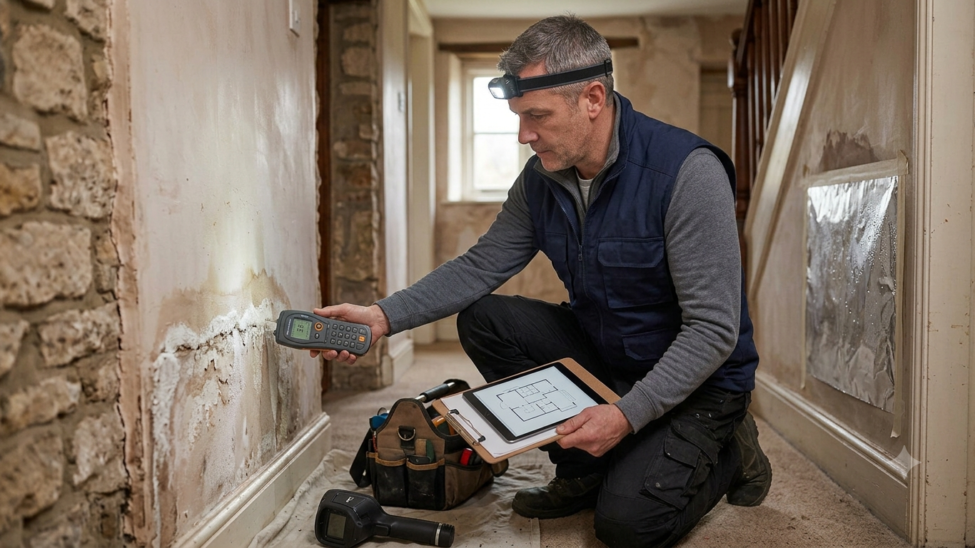
If you are unsure, try the foil test. Tape a piece of kitchen foil over the damp area, sealing the edges completely. Leave it for 24–48 hours:
- Moisture on the room side: It is likely condensation.
- Moisture behind the foil (against the wall): The moisture is coming from within the wall structure, suggesting rising or penetrating damp.
Note: This test is a useful indicator but is not definitive. Damp issues can be complex and sometimes have multiple causes.
4. Why Independent Advice Matters
Many damp-proofing companies rely on “free” surveys that often lead to sales-driven recommendations for chemical injections or tanking. If the problem is actually condensation or a minor external leak, these expensive interventions may be completely unnecessary.
An independent surveyor provides an objective diagnosis without the commercial incentive to sell you specific products. We focus on identifying the true root cause—whether it is a ventilation strategy issue, a minor maintenance fix, or a structural concern—to save you money and protect your property’s historic fabric.
Don’t guess with your property’s health. If you are seeing signs of damp, contact us today to schedule an independent, expert assessment. We provide the clarity you need to make the right decision for your home.
Wiltshire Damp Survey – Expert investigations. Clear reports. Unbiased advice.