

Is Your Lifestyle Creating Damp? 3 Surprising Habits That Cause Mould
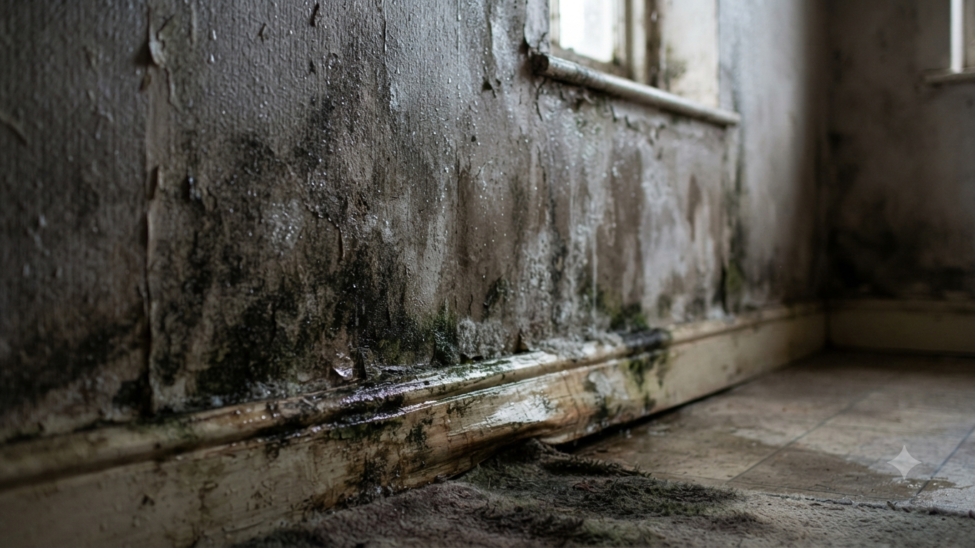
We’ve all seen it: those dark, fuzzy spots in the corner of a bedroom or the damp patch behind a wardrobe that appeared out of nowhere. The immediate reaction is to blame the house—”it’s an old building,” or “it must be rising damp.”
While structural issues do happen, in our experience as independent surveyors in Wiltshire, a significant number of mould and condensation problems are actually triggered by daily household habits.
If you are struggling with recurring damp, before you call in a contractor to strip your walls, consider if these three common habits are the true culprit.
1. The “Drying Indoors” Trap
In the UK, drying clothes on radiators is a standard winter survival strategy. Unfortunately, it is also one of the fastest ways to turn your home into a greenhouse. A single load of washing can release up to two litres of water into your air. If your windows are closed and your ventilation is poor, that moisture has nowhere to go—so it settles on your cold walls, providing the perfect breeding ground for mould.
2. Blocking the “Breathing” Points
Modern homes—and even renovated older homes—are built to be airtight to save energy. However, if you have blocked up airbricks, closed off trickle vents on your windows, or turned off your extractor fans to “save electricity,” you are suffocating your property. Air needs to circulate to carry moisture away. If you stop the airflow, you stop the drying process.
3. The “Cold Spot” Syndrome
Condensation happens when warm, moist air meets a cold surface. If you have furniture pushed directly against an external wall (like a heavy wardrobe or a bed), the air can’t circulate behind it. That wall remains cold, the moisture from your room settles on it, and mould grows silently out of sight.
When Is It Time to Call a Professional?
Sometimes, improving your ventilation and changing your habits isn’t enough. If you’ve tried keeping the room ventilated and keeping furniture away from walls, but the damp patch is growing, you may have a deeper issue—such as:
- A hidden pipe leak behind the wall.
- Water ingress from a blocked gutter or damaged roof tile.
- Rising damp from a failed damp-proof course.
This is where independent advice is vital. A treatment company will almost always recommend a chemical damp-proof course, which is expensive and often completely unnecessary if the problem is just a leaking gutter.
Get the Real Answer, Not a Sales Pitch
At Wiltshire Damp Survey, we don’t sell damp-proofing chemicals. We sell answers. We use diagnostic equipment to track moisture movement, identify the root cause, and tell you exactly what you need to do to fix it.
Whether it’s a simple change to your ventilation or a repair to your roof, we provide the honest, independent report you need to make the right decision.
Stop fighting the mould and start solving it. If you’re in Swindon or the wider Wiltshire area and you’re tired of damp patches that won’t go away, get in touch with us today.
Click here to Book Your Independent Survey Or give us a call at 01793 238738. Let’s find the real cause of your damp issues—and stop it for good.