

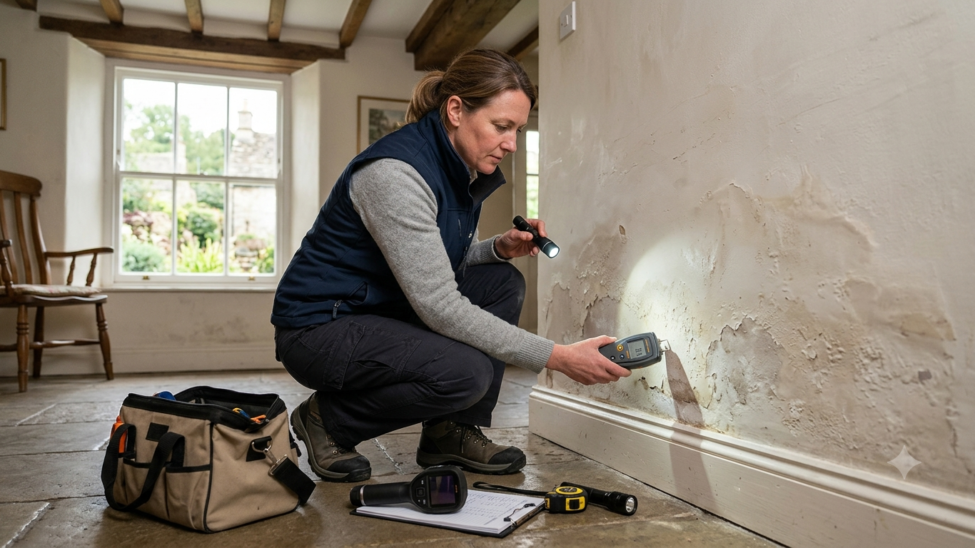
Is It Damp, Condensation, or a Hidden Leak? How to Tell the Difference (and Save Thousands)
If you’ve recently spotted a patch of peeling paint, noticed a persistent musty smell, or caught dark spots creeping along your skirting boards, your immediate thought is probably: “How much is this going to cost me to fix?”
Dealing with damp in your home can feel overwhelming. Worse still, jumping straight to conclusions—or calling out a damp-proofing contractor without a proper diagnosis—often leads to expensive treatments you might not actually need.
Understanding what is causing the moisture is the single most important step in protecting your property. Here is a breakdown of the three main culprits, how to spot them, and why getting independent advice makes all the difference.
1. Condensation & Mould: The Modern Home Dilemma
Condensation is by far the most common cause of indoor moisture in UK homes. It happens when warm, moisture-laden air hits cool surfaces like external walls, windows, or corners.
- Key Signs: Black speckling or spotty mould growth (often behind furniture or around window frames), water droplets forming on glass in the morning, and a damp, musty odor.
- Common Triggers: Poor ventilation, drying clothes indoors, unvented appliances, or uneven heating.
- The Fix: Often, condensation doesn’t require chemical damp proofing at all. It usually comes down to improving airflow, adjusting heating habits, or installing passive ventilation system tweaks.
2. Penetrating & Rising Damp: Structural Ingress
Unlike condensation (which comes from internal air), structural damp comes from moisture entering your home from the outside or ground level.
- Penetrating Damp: Occurs when rainwater seeps through masonry, cracked rendering, damaged guttering, or compromised roof tiles. You’ll usually see defined damp patches that expand after heavy rain.
- Rising Damp: Happens when groundwater travels upward through porous brickwork or masonry via capillary action because the building’s Damp Proof Course (DPC) has failed or been bridged by raised ground.
- Key Signs: Salt staining (white powdery residue), crumbling plaster, tidemarks on ground-floor walls up to 1 metre high, and decaying timber or wet rot.
3. Hidden Leaks: The Silent Offender
Sometimes, the damp patch on your ceiling or wall isn’t coming from weather or groundwater at all—it’s a pinhole leak in a pipe hidden beneath floorboards or behind drywall.
- Key Signs: Unexplained drops in boiler pressure, sudden spikes in your water bill, localized warm or cool patches on floors, or moisture patches that appear suddenly regardless of external weather.
- The Fix: Specialist non-destructive leak detection equipment can pinpoint the exact location of the pipe leak without tearing up half your room.
Why Independence Matters: Many damp-proofing companies offer “free surveys”—but they also sell chemical injection damp-proofing or structural plastering products. This creates a natural conflict of interest. An independent surveyor sells only impartial diagnostic reports, meaning you pay only for an accurate diagnosis, not unnecessary chemical work.
What to Do If You Suspect Damp in Your Wiltshire Home
If you’re buying a house, renovating an older property, or trying to solve a recurring moisture issue, don’t guess—investigate.
At Wiltshire Damp Survey, Paul brings over 20 years of hands-on experience and specialized diagnostic equipment across Swindon and Wiltshire to find the true root cause of damp issues. We don’t sell damp treatment products, so you get 100% honest, unbiased advice aimed at solving the issue permanently and cost-effectively.
- Buying a house? Book a Pre-Purchase Damp & Timber Survey before exchanging contracts.
- Got a leak or moisture problem? Give us a call directly at 01793 238738 or email paul@wiltshiredampsurvey.co.uk for clear, straightforward guidance.