

Is It Mould or Condensation? How to Stop Wall Dampness for Good
As temperatures drop across Wiltshire and Swindon, many property owners face a familiar frustration: moisture dripping down windows, dark spots forming on external walls, and a faint, lingering musty smell in bedrooms or bathrooms.
When mould appears, the natural reaction is to reach for a chemical spray or paint over the problem. But surface treatments only mask the issue. Without addressing why the moisture is trapped in your home, the mould will almost certainly return.
The Root Cause: Why Condensation Forms
Condensation occurs when warm, moisture-laden air hits a surface cold enough to drop the air temperature down to its dew point. The water vapor instantly turns back into liquid water.
In everyday living, activities like cooking, showering, drying clothes indoors, and simply breathing produce litres of water vapor daily. If that moisture cannot escape, it seeks out the coldest surfaces in your home:
- Thermal Bridges: External wall corners, window reveals, and lintels.
- Stagnant Air Zones: Behind large wardrobes, fitted furniture, or heavy curtains.
- Uninsulated Masonry: Single-brick walls or areas where cavity wall insulation has slumped or become damaged.
Left unmanaged, this continuous moisture creates the ideal breeding ground for black toxic mould (Stachybotrys chartarum), which can trigger or exacerbate respiratory issues, asthma, and allergies.
Condensation vs. Building Defects: Spotting the Difference
It is easy to misdiagnose high humidity as structural damp (or vice versa). Misidentifying the root cause often leads to unnecessary structural work when a simpler ventilation fix was all that was required.
       [ Cold Surface ]  +  [ High Indoor Humidity ]
                              │
                              ▼
                   [ Condensation Forms ]
                              │
                              ▼
                [ Sustained Damp Conditions ]
                              │
                              ▼
                     [ Mould Spores Grow ]
Key Signs of Condensation:
- Mould patches concentrated near windows, corners, or behind furniture.
- Water droplets pooling on window sills every morning.
- Dampness spread across wide, cold surface areas rather than a distinct, low-level line.
Key Signs of Penetrating or Rising Damp:
- Tide Marks: A clean horizontal damp band up to 1 metre high on ground floor walls.
- Salty Deposits: Flaking paint or white powdery salts pushing through the plaster.
- Isolated Wet Patches: Damp areas on upper-floor walls that worsen after rain (often indicating a leaking gutter, broken roof tile, or cracked render).
4 Practical Steps to Manage Moisture Right Now
Before booking a full survey, you can take immediate action to lower ambient indoor humidity:
- Improve Airflow: Ensure trickle vents on double-glazed windows remain open year-round, and use extractor fans whenever cooking or bathing.
- Control Furniture Placement: Pull heavy wardrobes and sofas at least 5 cm away from cold external walls to allow air to circulate freely.
- Dry Clothes Responsibly: Avoid hanging wet laundry on radiators without an extractor fan or dehumidifier running nearby.
- Maintain Consistent Heat: Keeping your home at a low, consistent ambient temperature prevents walls from dropping below the dew point overnight.
When to Book an Independent Damp Investigation
If you’ve tried adjusting your ventilation and heating but mould or damp patches persist, it’s time to look deeper.
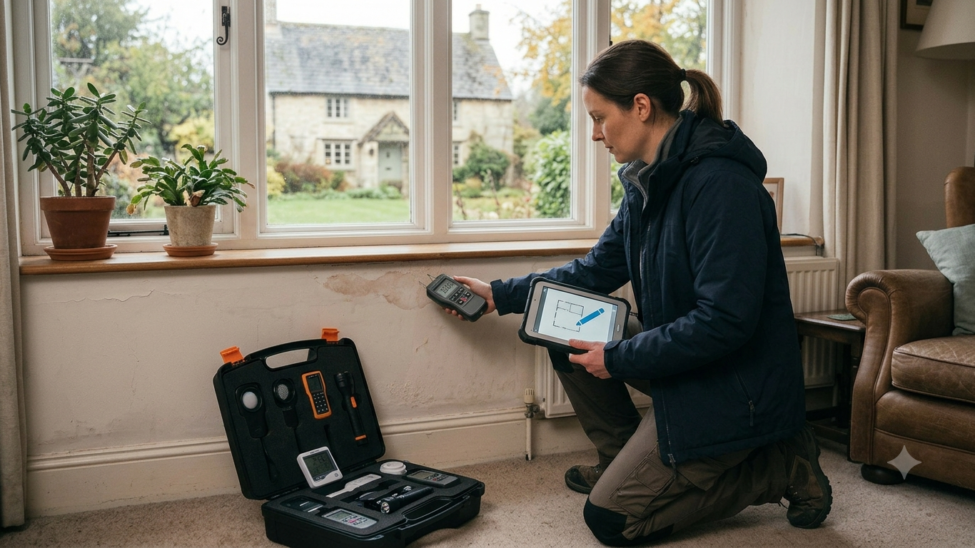
An independent damp survey uses specialist diagnostic tools—such as hygrometers, thermal imaging cameras, and non-destructive surface moisture meters—to:
- Pinpoint the exact dew point and humidity dynamics inside your home.
- Determine whether structural defects (such as compromised insulation or leaking pipes) are contributing to cold spots.
- Provide unbiased, actionable advice on targeted solutions—such as Positive Input Ventilation (PIV) systems, insulation improvements, or minor building repairs.
Stop Mould at the Source
Don’t spend money on temporary cover-ups or expensive, unnecessary chemical damp-proofing. Wiltshire Damp Survey provides completely independent moisture investigations across Swindon, Wiltshire, and the South West.
- Call direct: 01793 238738
- Email: info@wiltshiredampsurvey.co.uk
- Learn more: wiltshiredampsurvey.co.uk