

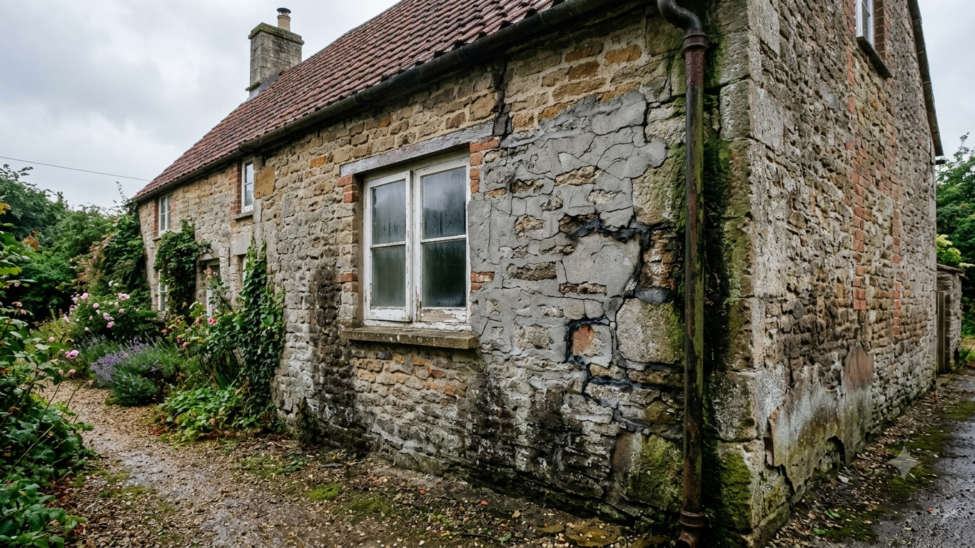
Why Your Old Wiltshire Property Needs to “Breathe” (And How Modern Repairs Cause Damp)
Wiltshire is home to some of the most beautiful historic architecture in the country. From timber-framed Tudor cottages to classic red-brick Victorian terraces in Swindon and grand stone homes in the Cotswold borders, our county’s heritage is written in its walls.
But if you live in a property built before 1919, you have probably noticed that it behaves differently than a modern house. And if you are struggling with damp, the solution isn’t to seal it up—it is to let it breathe.
Unfortunately, many traditional homes in our area are being slowly damaged by modern, non-breathable building materials. Here is why your historic home might be suffering from damp, and why modern “fixes” are often the root cause.
How Old Buildings Handle Moisture: The “Breathability” Principle
To understand why old homes get damp, we have to look at how they were built.
Modern homes (built roughly post-1920) are designed on a barrier system. They use cavity walls, plastic membranes, concrete floors, and synthetic barriers to keep moisture completely out.
Traditional buildings work on a completely different principle: breathability.
The Breathability Principle: Period properties were built using porous materials like lime mortar, soft red brick, timber, and local stone. These materials naturally absorb moisture from the air and the ground, and then harmlessly release it back into the atmosphere when the wind blows or the heating is on.
Historically, open fires, sash windows, and lime plaster ensured a constant flow of air that kept the structure dry.
The Modern “Improvements” That Trap Damp
Damp issues in period homes almost always start when someone tries to apply modern “barrier” techniques to a traditional, breathable building.
When well-meaning homeowners or builders use modern materials to “seal” an old property, they trap the moisture inside the walls. Here are the four biggest culprits we see during our Wiltshire damp surveys:
- Cement Pointing: Replacing soft, flexible lime mortar with hard, modern cement. Cement traps water in the joints, forcing it into the bricks or stones, which then crack and crumble when the winter frost hits.
- Gypsum Plaster: Traditional lime plaster allows moisture to pass through it. Modern gypsum plaster acts like a dense plastic skin, trapping moisture against the brickwork and bubbling off the wall.
- Plastic Masonry Paint: Painting external brickwork or stone with modern synthetic paints seals the exterior, stopping the wall from drying out.
- Concrete Overlays: Pouring concrete over old, breathable sub-floors forces ground moisture sideways into the base of the walls, creating what looks exactly like rising damp.
Why a Chemical DPC is the Wrong Cure for an Old Wall
If you call a standard damp-proofing contractor to look at a damp wall in a Victorian terrace, their standard response is often to inject a chemical damp-proof course (DPC) and render the internal wall with sand and cement.
In a pre-1919 building, this is a recipe for disaster.
Injecting chemicals into old, solid stone or brick walls rarely works because the structures are highly irregular and saturated with historic salts. Furthermore, backing that wall with dense, waterproof sand-and-cement render simply hides the damp for a few years while the water continues to rise higher and decay the floor joists behind the scenes.
To fix damp in an old building, you don’t need chemicals. You need to identify where the moisture is trapped and restore the building’s natural ability to dry itself out.
How to Restore the Balance in Your Period Home
If you own a historic home in Wiltshire and are dealing with damp, the path to a dry home usually involves a few simple, sympathetic steps:
- Check the Outside First: Are ground levels too high? Are gutters leaking? Is there modern cement pointing that needs to be raked out and replaced with lime?
- Ditch the Gypsum: If walls have been plastered in modern gypsum, replacing it with traditional, breathable lime plaster can instantly resolve damp patches.
- Improve Ventilation: Restoring blocked air bricks, installing passive ventilation, or using chimney vents can help move moisture out of the property naturally.
Get Unbiased, Heritage-Sensitive Advice
An old house requires an understanding of traditional building physics. Before you let a contractor drill holes into your historic brickwork or plaster over your stone walls with cement, get an independent assessment.
We specialize in diagnosing damp issues in traditional and listed buildings across Wiltshire. We will tell you exactly why the moisture is there, and how to fix it using sympathetic, cost-effective, and historically correct methods.
Own a period property in Wiltshire? Contact Wiltshire Damp Survey today on 01793 238738 or email paul@wiltshiredampsurvey.co.uk to book an independent diagnostic survey.